To this pathologist, a cadaver is more than a dead body. It’s a mystery to be solved.
In ways old and new, visuals play a key role in how we learn, teach, and practice medicine.
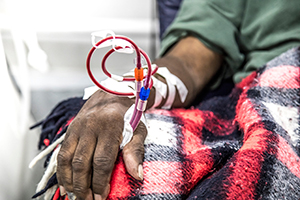
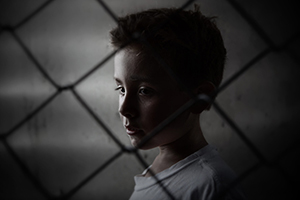
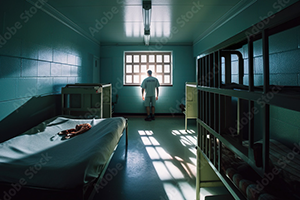
A cadre of medical and legal advocates cares deeply about the health of people behind bars.
Colleagues remember Dr. Chuck Carpenter: mentor, teacher, and friend.
A one-time interim dean dedicated his career to improving how we care for older people.
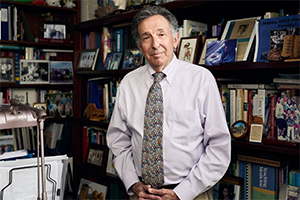
For Griffin Rodgers, research matters most when it translates to a cure.
Malaria didn’t manage to kill Jake Kurtis. He wants it to stop killing others.
Willoughby Britton believes in the power of mindfulness meditation to change your brain-and your life–for the better. She just wants you to be careful.
Got a disaster?
Rear Admiral David Rutstein MD’83 is your go-to guy.
A family medicine doc finds community and purpose on a New Hampshire mountainside.
From building a satellite to exploring immunology, virtual reality, and more, undergraduates are engaged in ambitious research.
Brandeis harbors big ambitions for the arts. This rings especially true for its composers.
In which Brandeis is revealed to be much greater than the sum of its parts.
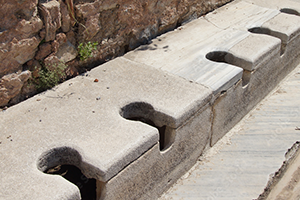
Ann Olga Koloski-Ostrow brings the everyday realities of the classical world — including its toilets and sewer systems — to life.
The Eli J. & Phyllis N. Segal Citizen Leadership Program celebrates its 10th anniversary.
Seven Siegel, Heller MBA/MPP’16, believes in the positive power of games.
10 Years of the Segal Citizen Leadership Program.
Connecting the devastating effects of the Civil War and westward expansion.
What we lose when we only look through the lens of able-mindedness.
Knowing our world problems won’t magically disappear, we need to ask: What’s next? Professors offer their insights.
Becca (Ashley) Asare ’97 is helping to support African farmers and protect the environment.
Examples of the innovative ways faculty members kept their students engaged and connected during the spring semester.
Colgate has recently received more than $1.3 million in grants for faculty research from the National Science Foundation.
A capstone seminar takes students on a multidimensional exploration of a universal theme.
In the years leading up to the Second World War, German seafarers joined forces with an international labor union to combat the rise of fascism.
Using satellite imagery and field observation, a geographer studies changes in one of the world’s most important ecosystems.
Hilary Nicholson ’12 is using a decades-old concept to take aim at cancer.
Senegalese choreographers are using dance to explore socially taboo subjects.
Now with more amino acids!
Interview with Louis W. Sullivan, MD.
When the body’s clock is off, mental health suffers.
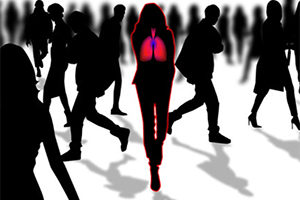
Meet Linda Van Marter, who’s helping little breathers.
A sculptor practices the art and science of conservation.
Three UB alumni recall coming of age as scholars, writers and friends.
Using psychology and neuroscience to better understand political behavior.
Heeding the call of family history while exploring the role of clerics in the Shi’a world.
Renato Lima de Oliveira examines how a country’s natural resources affect its politics and policies.
For Amanda Rothschild, political science meets personal history in her studies of how the United States responds to genocide.
Information and the Latino vote.
Justin de Benedictis-Kessner helps explain political behavior at the federal level.
A former commercial fisherman is shifting paradigms one ocean farm at a time.
Meet medical oncologist and colorectal cancer specialist Wafik El-Deiry, MD, PhD, FACP.